International Training Curriculum For OSA in Medicine
Published 22/12/2025 Updated 08/02/2026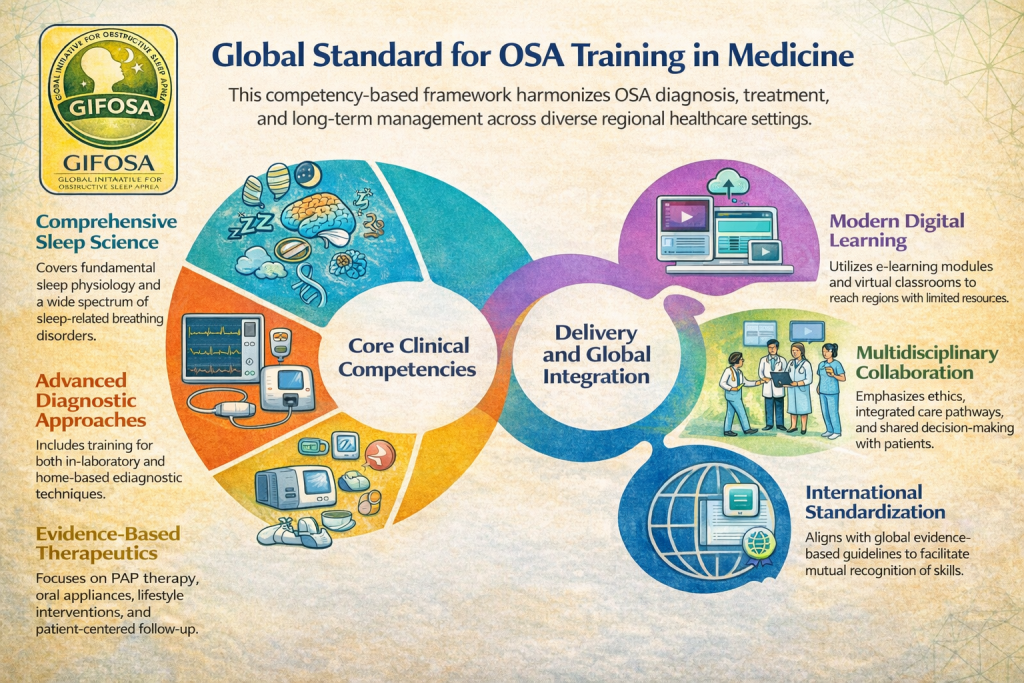
The growing global burden of sleep disorders, particularly obstructive sleep apnea (OSA), highlights the urgent need for well-trained healthcare professionals with expertise in sleep medicine. Significant variations in training standards, resource availability, and access to education continue to limit the capacity of healthcare systems to deliver timely and effective sleep care. In response to these challenges, GIFOSA supports the development of an International Training Curriculum for OSA in Medicine aimed at promoting harmonized, high-quality education worldwide.
The International Training Curriculum is designed as a structured, competency-based framework that can be adapted to diverse healthcare settings and professional backgrounds. It targets physicians, allied health professionals, technologists, and trainees involved in the diagnosis, treatment, and long-term management of sleep disorders. By defining core knowledge areas and practical skills, the curriculum seeks to establish a common foundation for sleep medicine training while allowing flexibility for regional needs and resources.
Key components of the curriculum include fundamental sleep physiology, sleep-related breathing disorders, diagnostic techniques, and therapeutic strategies. Particular emphasis is placed on obstructive sleep apnea, given its high prevalence and strong associations with cardiovascular, metabolic, and neurocognitive consequences. Training modules address both in-laboratory and home-based diagnostic approaches, evidence-based treatment options such as positive airway pressure therapy, oral appliances, and lifestyle interventions, as well as patient-centered care and long-term follow-up.
In addition to clinical knowledge, the curriculum incorporates education on multidisciplinary collaboration, ethics, and quality assurance in sleep medicine practice. Participants are encouraged to understand the roles of different healthcare professionals within integrated care pathways and to develop communication skills that support shared decision-making with patients. The curriculum also highlights the importance of data interpretation, outcome monitoring, and continuous improvement in clinical practice.
To enhance accessibility and global reach, the International Training Curriculum for OSA in Medicine integrates modern educational strategies, including e-learning modules, virtual classrooms, and case-based discussions. Digital platforms enable flexible learning and support participation from regions with limited access to specialized training centers. Where feasible, the curriculum may be complemented by hands-on workshops, mentorship programs, and supervised clinical experience to reinforce practical skills.
Alignment with international standards and evidence-based guidelines is a central principle of the curriculum. By promoting consistency in training content and competencies, the program aims to facilitate mutual recognition of skills, support workforce development, and strengthen capacity for sleep medicine services worldwide. The curriculum also serves as a foundation for future certification initiatives, research collaboration, and continuing professional development.
Through the International Training Curriculum for OSA in Medicine, GIFOSA advances its mission to improve awareness, education, and best practices in sleep health. By investing in high-quality, adaptable training, this initiative contributes to sustainable improvements in the prevention, diagnosis, and management of sleep disorders, ultimately supporting better respiratory health, healthier sleep, and improved quality of life globally.