World OSA Day – September 9, 2026. A Global Call to Recognize, Diagnose, Treat, and Prevent OSA – “Healthy Breathing, Healthy Sleep”
Published 09/09/2026 Updated 09/09/2026Dear Colleagues, Healthcare Professionals, Health Authorities, Scientific Societies, and Healthcare Systems Worldwide,
On September 9, 2026, the Global Initiative for Obstructive Sleep Apnea (GIFOSA) invites the International Health Community to observe World Obstructive Sleep Apnea Day – World OSA Day, under the message:
“Healthy Breathing, Healthy Sleep.”
Obstructive sleep apnea (OSA) is one of the most prevalent yet underrecognized chronic sleep-related breathing disorders worldwide. It affects people across countries, cultures, socioeconomic groups, and stages of life. When undiagnosed or inadequately treated, OSA is associated with impaired sleep quality and daytime functioning and contributes to substantial cardiovascular, metabolic, neurocognitive, occupational, and public-health burdens.
Yet millions of people living with OSA remain undiagnosed, untreated, or without equitable access to appropriate care.
World OSA Day therefore represents more than an awareness campaign. It is a call for collective action.
Why September 9 – 09/09?
September 9 was selected by GIFOSA for its scientific, symbolic, and communication value. The repeated “9/9” provides a simple visual representation of the recurrent nature of upper-airway obstruction and repeated apnea events during sleep. It is also a memorable, culturally neutral date that can provide OSA with a recognizable place in the global health calendar.
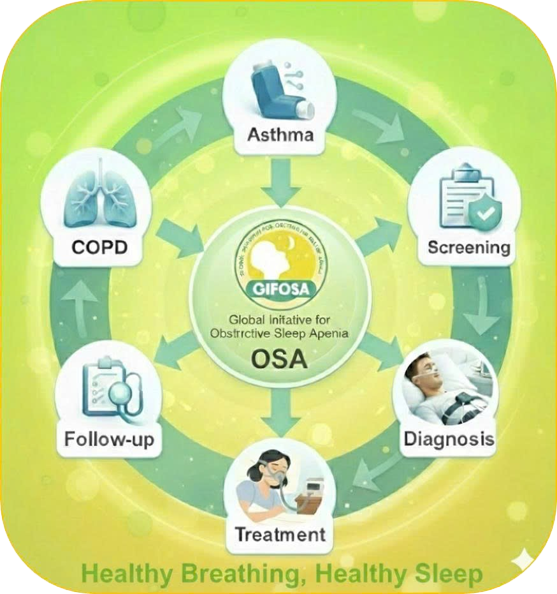
The accompanying illustration summarizes this symbolism and the meaning of September 9 as “World OSA Day”.
A Call to Healthcare Systems Worldwide
On this first World OSA Day, GIFOSA calls upon the global health community to move from awareness to action. We encourage Healthcare Systems and stakeholders to:
- Recognize OSA as an important global public-health challenge, rather than considering it solely a specialized sleep disorder.
- Improve awareness and early identification, particularly among people with obesity, hypertension, cardiovascular and metabolic diseases, resistant hypertension, atrial fibrillation, stroke, and excessive daytime sleepiness, as well as other populations at increased risk.
- Strengthen access to appropriate diagnosis, including sleep medicine expertise, polysomnography, home sleep apnea testing, and validated diagnostic pathways adapted to local resources.
- Promote personalized and comprehensive treatment, incorporating positive airway pressure therapy, lifestyle and weight management, oral appliances, positional and surgical approaches, and emerging therapies when clinically appropriate.
- Integrate sleep and respiratory health into primary care and chronic-disease programs, connecting OSA care with cardiovascular, metabolic, neurological, respiratory, occupational, maternal, pediatric, and healthy-aging strategies.
- Invest in education and capacity building, so that physicians, nurses, dentists, pharmacists, psychologists, technicians, and other healthcare professionals can recognize and appropriately manage sleep-disordered breathing.
- Reduce global inequities in OSA care, particularly in low- and middle-income countries and underserved communities where diagnostic and therapeutic resources remain limited.
- Support research, innovation, digital health, artificial intelligence, and precision medicine to make OSA prevention, diagnosis, monitoring, and treatment more accessible, effective, affordable, and sustainable.
From Better Sleep to Better Global Health
Sleep Health should be considered an essential component of human health. Healthy breathing during sleep contributes not only to restorative sleep, but also to cardiovascular and metabolic health, cognitive performance, mental well-being, workplace and road safety, healthy aging, and quality of life.
Addressing OSA therefore requires cooperation extending beyond sleep laboratories. It requires engagement from primary care, hospitals, universities, professional societies, public-health agencies, governments, patient organizations, researchers, industry partners, and communities.
No country and no healthcare system should consider the enormous burden of undiagnosed sleep apnea inevitable.
Through GIFOSA, we envision a world in which OSA can be recognized earlier, diagnosed appropriately, treated effectively, and—whenever possible—prevented through healthier lifestyles, healthy weight, physical activity, and better sleep health throughout the life course.
September 9: One Date, One Global Message
On September 9, 2026, we invite healthcare institutions around the world to organize educational activities, screening and awareness programs, scientific meetings, professional training, community outreach, and public communication around OSA and healthy sleep.
We also invite governments, scientific societies, universities, hospitals, healthcare professionals, researchers, patients, families, and communities to share one common message:
Healthy Breathing, Healthy Sleep.
Better Breath, Better Sleep, and Better Life for All.
May September 9 become a yearly moment when the world remembers that protecting breathing during sleep is an essential part of protecting health, well-being, and healthy longevity.
Together, we can transform OSA from a largely hidden global health burden into a recognized, preventable, diagnosable, and treatable public-health priority.
With our highest consideration and our commitment to better sleep health for all,
Prof. Sy Duong-Quy, MD, PhD
Founder and President
Global Initiative for Obstructive Sleep Apnea (GIFOSA)
September 9, 2026
World Obstructive Sleep Apnea Day
“Healthy Breathing, Healthy Sleep”