About us
Introduction
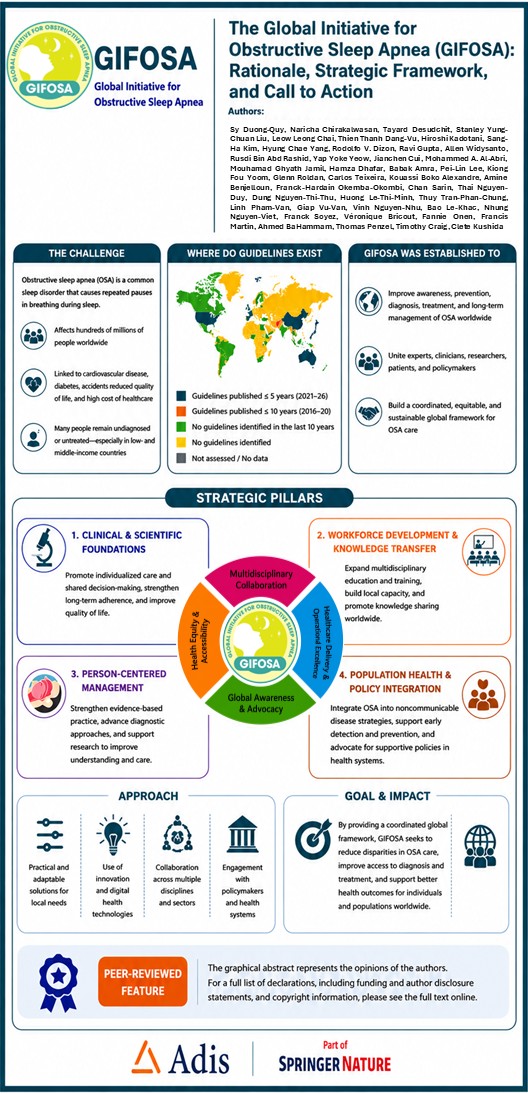
The Global Initiative for Obstructive Sleep Apnea (GIFOSA) is an international collaborative program dedicated to advancing the understanding, prevention, diagnosis, and management of Obstructive Sleep Apnea (OSA) worldwide.
Inspired by the successful frameworks of international initiatives for chronic diseases, GIFOSA aims to provide evidence-based global strategies, promote interdisciplinary cooperation, and strengthen healthcare systems in addressing the rising burden of OSA.
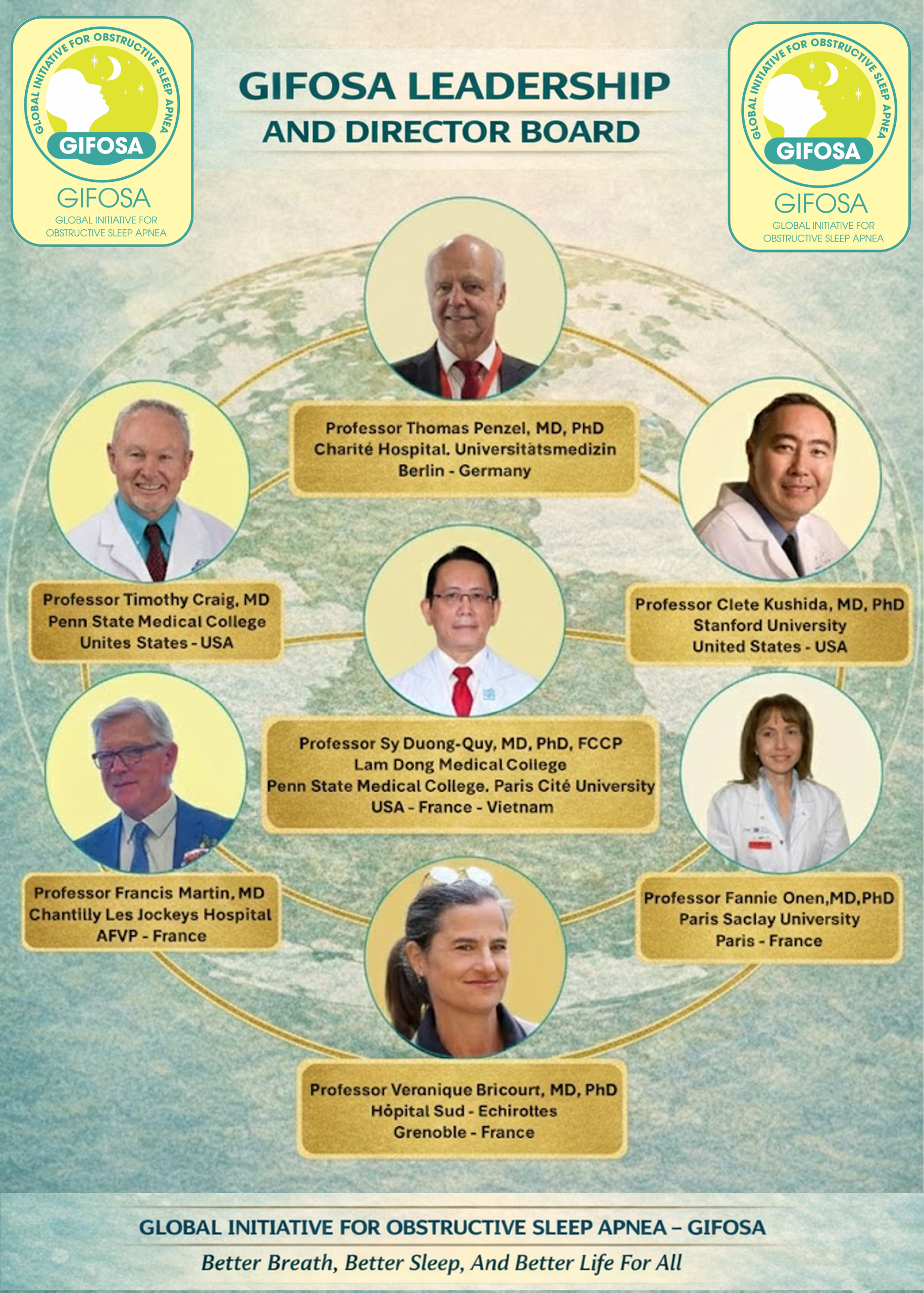
Under the leadership of international executive members, GIFOSA fosters scientific exchange, harmonized guidelines, capacity building, and cross-border research networks to improve patient outcomes and reduce the global impact of untreated sleep-disordered breathing.
Vision & MISSION

Vision
To become the leading global authority on Obstructive Sleep Apnea by:
- Establishing standardized, evidence-based guidelines for diagnosis and treatment.
- Promoting equitable access to sleep-health services worldwide.
- Strengthening the integration of OSA management within respiratory,
- cardiovascular, metabolic, and primary care systems.
- Enhancing global awareness of sleep health as a fundamental pillar of well being.
- Encouraging innovation, research, and technological development in sleep medicine.
Mission
GIFOSA’s mission is to reduce the global morbidity and mortality associated with OSA by:
- Clinical & Scientific Objectives
- Capacity-Building Goals
- Advocacy Goals
GIFOSA’s mission is to reduce the global morbidity and mortality associated with OSA by
Clinical & Scientific Objectives
- Developing global OSA management guidelines, analogous to GINA and GOLD frameworks.
- Defining standardized phenotypes, biomarkers, and diagnostic pathways.
- Promoting early detection through scalable screening models including HSAT, telemedicine, and AI-assisted tools.
- Supporting high-quality clinical trials on OSA, comorbidities, and novel therapeutic approaches.
Capacity-Building Goals
- Enhancing training for sleep specialists, pulmonologists, cardiologists, ENT experts, neurologists, and primary-care providers.
- Developing international certification programs in sleep medicine.
- Establishing regional OSA Centers of Excellence.
- Supporting low-resource countries with simplified diagnostic algorithms.
Advocacy Goals
- Elevating public and governmental recognition of OSA as a major health concern.
- Promoting insurance and governmental coverage for OSA screening and CPAP therapy.
- Encouraging global industry collaboration for accessible sleep technologies.
Scientific Committees
Committee on Diagnosis and Screening
Standardization of HSAT, PSG, AI-based scoring.
Screening strategies for primary care and special populations (children,
elderly, obesity, occupational drivers).
Criteria for OSA severity and phenotyping.
Committee on Treatment & Long-Term Management
CPAP/BiPAP guidelines
Adherence-improvement strategies
Oral appliance therapy
Surgical approaches
Weight loss/rehabilitation
Telemonitoring protocols
Committee on Comorbidities
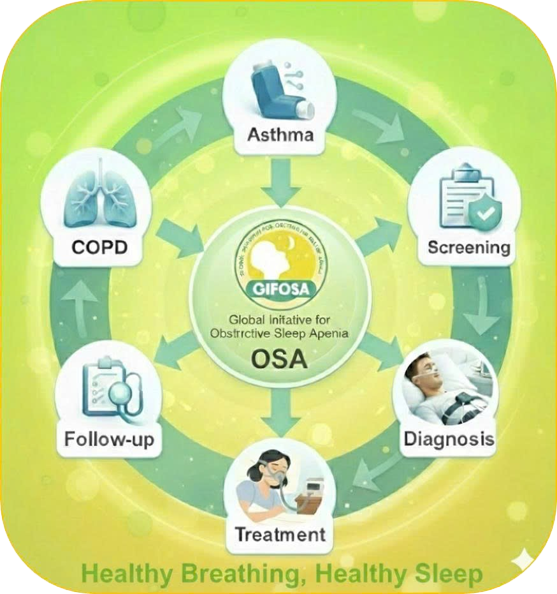
Asthma–COPD–OSA Overlap (ACOSOU)
Neurocognitive dysfunction
Cardiometabolic complications
Hypertension and resistant hypertension
Type 2 diabetes and metabolic syndrome
Committee on Public Health & Policy
Advocacy for reimbursement models
Raising awareness in governments, communities, and industry
Cost-effectiveness analyses
Committee on Research & Innovation
International multicenter trials.
Promotion of innovations in telemedicine, wearable diagnostics, and smart CPAP.
Collaborative global registry for OSA.
Key Deliverables (2025–2030)
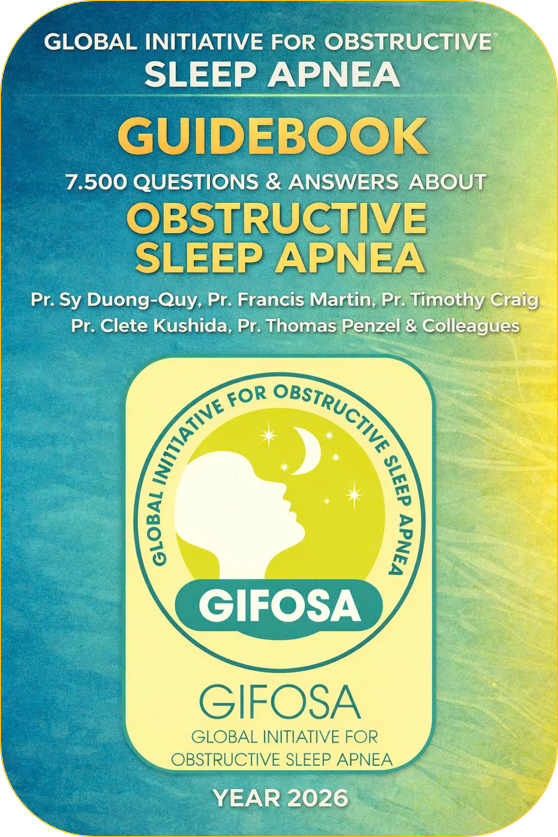
- GIFOSA Global OSA Guideline
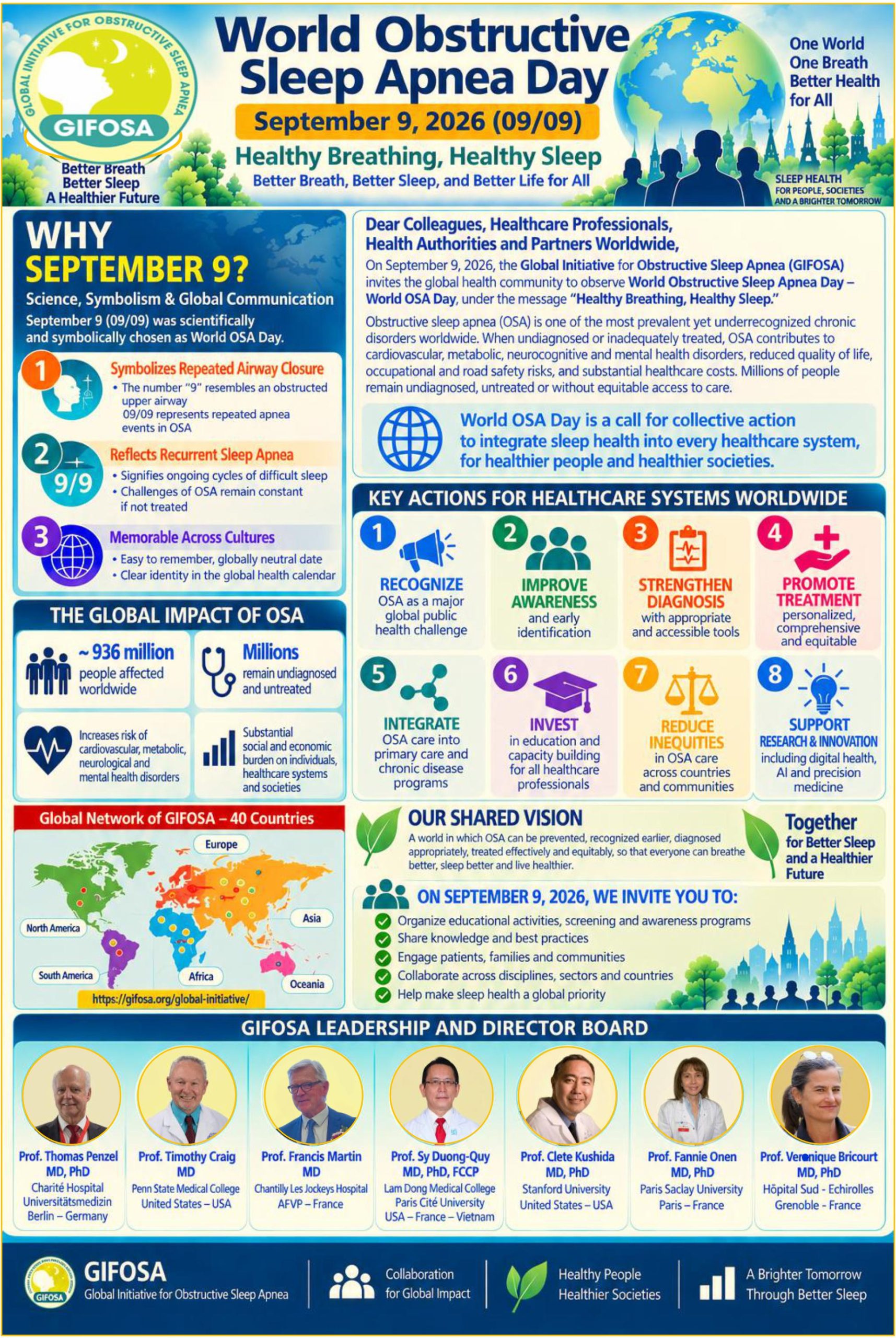
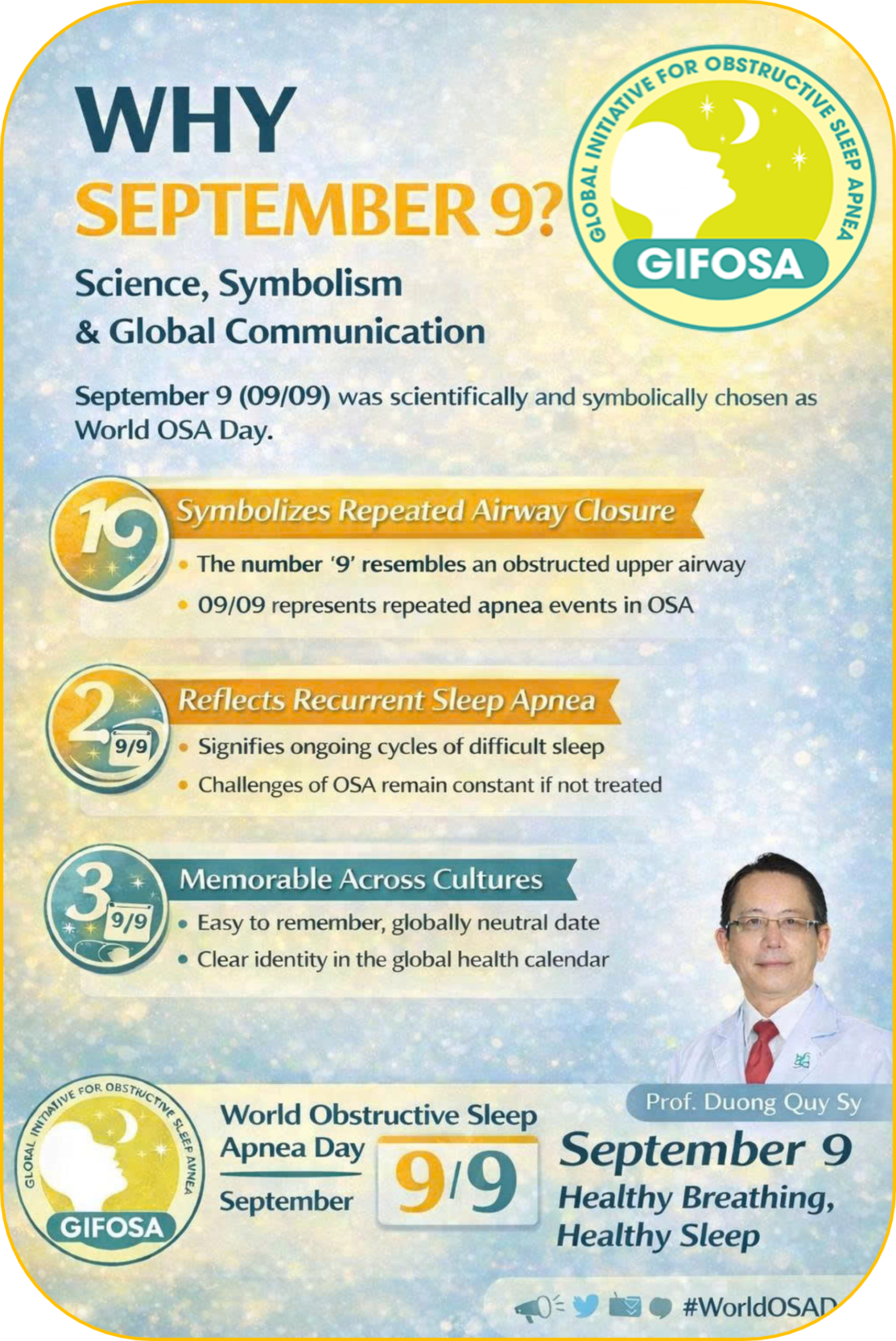
- OSA Awareness Campaigns (World OSA Day)
- Annual Global OSA Report on prevalence, burden, trends
- International OSA Screening Toolkit for Primary Care
- GIFOSA Registry for global OSA data
- International Training Curriculum for sleep medicine
- Telemedicine-based OSA Management Framework
Strategic Partnerships
GIFOSA will collaborate with:
WHO Sleep Health initiatives.
Global organizations WSS (World Sleep Society).
AFVP, APSS, ERS, ATS, AASM, JRS, APSR.
Ministries of Health & National Health Systems.
Global industry leaders.
Expected Global Impact
Increased public awareness of sleep health as a global priority.
Improved early detection of OSA across all healthcare levels.
Reduction in cardiovascular, metabolic, and neurocognitive complications.
More efficient and standardized global approaches to CPAP adherence.
Enhanced international cooperation in sleep research.
Better health-economic outcomes through early intervention.